
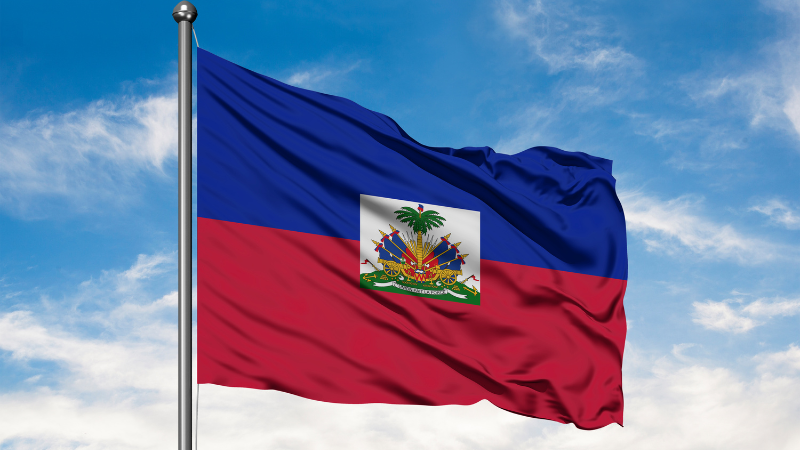
Haitian Flag.
By Djenane Gourgue
In American cities, a key to the city is meant to symbolize trust, appreciation, and gratitude. It is supposed to reflect a genuine relationship between a city and the individuals who contribute to its growth, culture, and community spirit. But when such honors appear suddenly, without a history of engagement or support for the community being celebrated, it is fair to ask: what is the real motivation behind the recognition?
In the city of Tamarac, many Haitian residents have begun asking that question.
I have lived in Tamarac since 1999. Over the years, the Haitian community here has grown significantly. Today, there are more than 5,000 Haitian residents in the city. They are homeowners, taxpayers, business owners, professionals, and families raising the next generation of Americans. They contribute daily to the social and economic life of the city.
Yet for many years, their presence has rarely translated into meaningful engagement from local leadership. When Marlon Bolton was first elected in 2016, many residents hoped that new inclusive leadership would bring broader outreach. However, in the years that followed, there has been little visible effort to support initiatives specifically aimed at empowering or uplifting the Haitian community in Tamarac.

Community organizations, cultural initiatives, youth programs, and economic efforts connected to Haitian residents have rarely received attention or support from city leadership.
Then, suddenly, recognition appears.

Agenda item for the March 11 meeting
No one disputes that Rutshelle Guillaume – a respected artist with a strong following across the Haitian diaspora could receive a key in any city in the world. But the question is not about their merit. The question is about timing and consistency.
Why does recognition for Haitian figures appear only recently, after years of limited engagement with the Haitian residents who actually live and vote in the city?
Why are proclamations and ceremonial keys easier to offer than sustained support for community programs, cultural initiatives, or economic opportunities that would directly benefit the thousands of Haitian families who call Tamarac home?
This pattern is not entirely unfamiliar in South Florida politics. In nearby Lauderhill, similar gestures have appeared following tensions between elected officials and Haitian community leaders. Public ceremonies suddenly highlight Haitian figures, creating the appearance of inclusion while deeper issues remain unresolved.
“I have a Haitian friend “– they say
Symbolic recognition is easy. A proclamation costs nothing. A key to the city makes for a good photograph. But empowerment requires commitment.
Communities notice the difference.
If the intention is truly to celebrate Haitian culture and contribution, there are far more meaningful ways to do so. For example, instead of a brief ceremonial moment at a commission meeting, the city could organize a community celebration around Haitian Flag Day in May, inviting residents, families, and local organizations to participate.
Imagine a large community concert at one of Tamarac’s parks, featuring Rutshelle Guillaume and celebrating Haitian heritage alongside the thousands of Haitian residents who live in the city. Such an event would not only honor the artist but would also acknowledge and include the community itself.

If Vice Mayor Marlon Bolton truly believes he has the majority support on the dais, then he has the ability to do more than present a ceremonial key. He could support a real cultural event by booking the artist and paying her to perform, as cities routinely do when they host cultural celebrations. There comes my Haitian ‘mhumm.”
Such an event could also include respected Haitian media personality Mrs. Ludy Saintil as the host, creating a celebration that genuinely reflects the Haitian community’s presence and cultural influence in Tamarac.
That would be a far more meaningful gesture than a symbolic key—perhaps even a constructive step toward repairing trust. In fact, it could serve as a gesture of goodwill in lieu of the apology that political pride sometimes prevents leaders from offering.
Transparency also matters. When ceremonial recognitions are presented, residents have the right to understand how public resources are used. For that reason, I will be formally requesting information on how much this recognition will cost the city, including any related expenses.
The Haitian community in Tamarac does not need symbolic validation to know its value. Its contributions are visible every day—in businesses, churches, schools, and neighborhoods across the city.
What the community seeks is not ceremonial gestures but consistent engagement, policy attention, and genuine partnership.
Because ultimately, when recognition appears only after years of silence, the question naturally arises:
Is the city honoring the community—or simply managing its image with the community?

